Hi everyone!
Last month, while visiting Turkey, I ran out of the diapers I’d brought from the U.S. Even though I’d calculated the exact number I’d need, I didn’t pack any extras. Of course, I found myself in a tricky situation during the busiest holiday of the year—right before Eid, when online ordering was simply impossible. So, I did what any parent would do: I grabbed the only brand I could find at the local market. But before I get into which brand that was (and how it went), I want to talk to you—as a pharmaceutical scientist—about why I’m so picky about diapers, and what you should really be paying attention to when choosing them.
Why Am I So Picky About Diapers?
When something touches your baby’s skin, it’s not just in contact with moisture or messes—it’s also in contact with dozens of chemicals and additives used in the manufacturing process. And a baby’s skin? It can be up to five times more absorbent and sensitive than adult skin! That means anything in a diaper—whether it’s dyes, adhesives, fragrances, or water-repellent chemicals—can potentially impact your baby’s immune system, hormones, and long-term health.
What Do I Pay Attention To When Choosing Diapers?
Recent scientific studies and independent lab tests (think Mamavation 2024, FDA/CDC, the European Environmental Agency, Environmental Working Group [EWG], and others) have made one thing clear:
- PFAS (Per- and polyfluoroalkyl substances):
Used for stain and water resistance, these “forever chemicals” stick around in the body and the environment—they’re not easily eliminated. They’ve been linked to cancer, hormone disruption, and weakened immunity. Nearly a quarter of diapers tested in 2024 had measurable PFAS (Mamavation, 2024). - Phthalates:
Found mostly in scented diapers or flexible plastic parts, these are hormone disruptors linked to male infertility, hyperactivity, and obesity in children (CDC ATSDR; Meeker, 2009). - PTFE (Teflon) and Fluoride:
PTFE is a PFAS that’s not water-soluble, sometimes used in diaper manufacturing, and can even slip past certifications like OEKO-TEX.
Fluoride, often used for whitening, can affect thyroid, neurological, and kidney development in kids when exposure is high (Peckham, 2015). - Chlorine and Dioxins:
Bleaching with elemental chlorine or chlorine dioxide leaves behind toxic byproducts like dioxins and furans—known carcinogens (ATSDR, 2012). - The Transparency Trap:
Phrases like “chlorine-free,” “natural,” “eco,” or “hypoallergenic” don’t automatically mean a diaper is safe. For example, OEKO-TEX Standard 100 is a respected textile certification, but doesn’t always detect PFAS polymers like PTFE. Some products still carry risk even with these labels.
A Few Quick Science Facts:
- Don’t trust only “fragrance-free” or “eco” claims—look for real transparency about ingredients and actual lab results.
- TCF (Total Chlorine Free) bleaching is much safer than ECF (Elemental Chlorine Free).
- Always ask about parabens, phthalates, chlorine, formaldehyde, sulfates, synthetic dyes, petroleum-based ingredients, polyethylene, and polypropylene.
The Diapers I Tried: Real Experiences & Scientific Results
1. Sleepy Natural (Turkey)
This was the only diaper I could find during the holiday rush.
My honest take:
- Absorbency was terrible—I had to change it twice a night and basically every hour during the day.
- Constant leaks and diaper rash, no matter how often I changed.
- No real information on their website about chemicals (whether it’s TCF, phthalate-free, paraben-free, PFAS-free, etc.). They mention “0% chlorine,” but don’t clarify if that’s elemental, in all layers, or just marketing. Over-bleached white color made me suspicious of hidden chemicals.
Scientific Note:
I tried to contact the company to ask about TCF/TFF status—no response. Major transparency issue.
Even though it’s one of the most popular brands in Turkey, I just can’t trust a product without clear ingredient disclosure and independent testing.
My advice: Don’t pick this diaper just because it’s cheap or easy to find, especially if your baby has sensitive skin.
2. Bamboo Nature (Probably the “cleanest” you can get in Turkey)
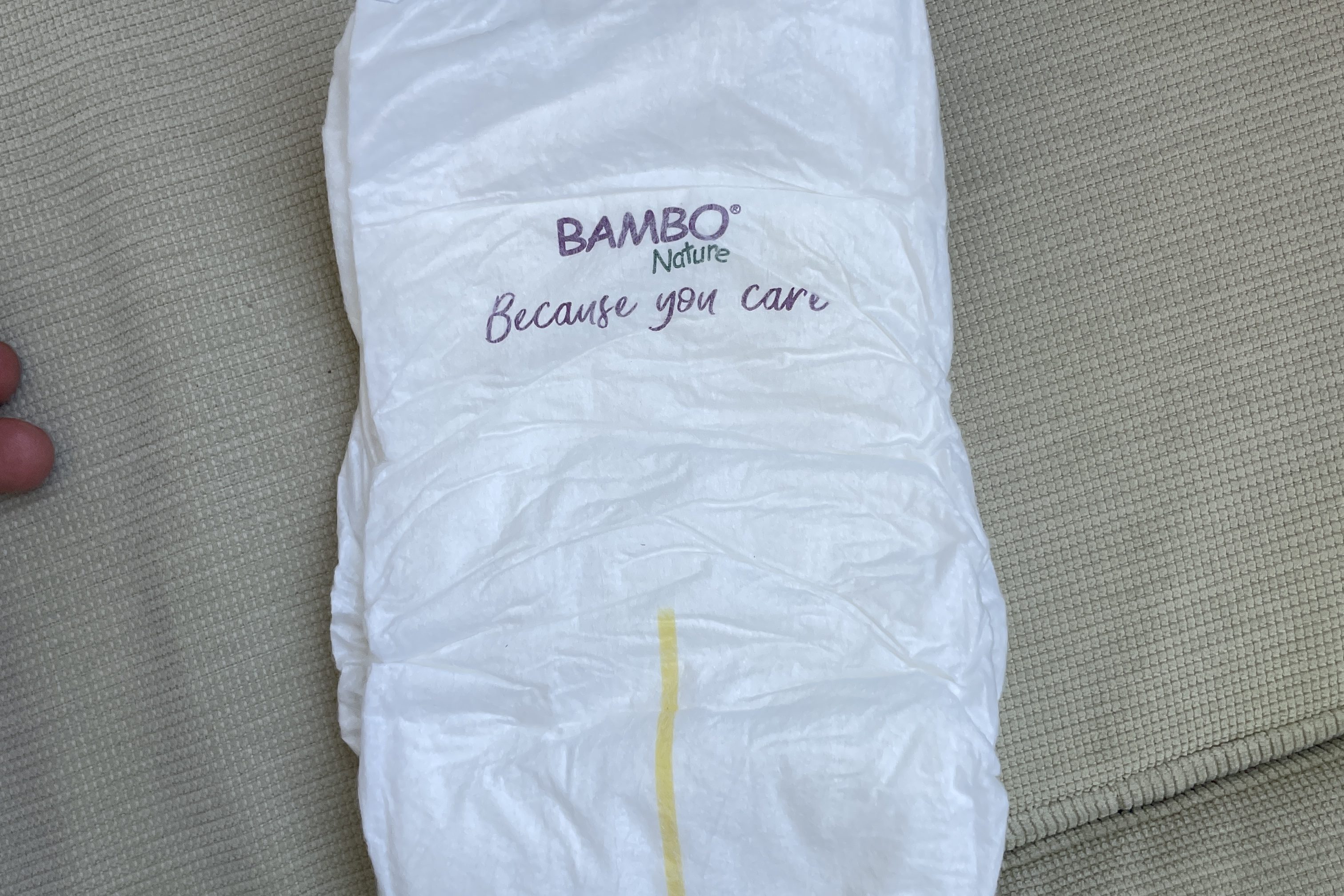
My mom ordered Bamboo Nature for me, and I was genuinely impressed:
- Fantastic absorbency—stays dry longer, no rash, super soft.
- Free from TCF, phthalates, parabens, and fragrances.
Lab Result:
Mamavation’s EPA-certified lab found 18 ppm of organic fluorine (a PFAS indicator) on the inside, 22 ppm on the outside.
Not “100% PFAS-free,” but way better than most mainstream brands.
It’s got strong eco-labels like Nordic Swan, but U.S. batches can still have low levels of PFAS.
Reference: Mamavation, 2024
My advice: Probably the safest and cleanest diaper you’ll find in Turkey—but keep checking for updated lab tests if you’re super cautious.
3. Sleepy Bio Natural
Next up was Sleepy’s “eco” line.
- Slightly better absorbency than regular Sleepy Natural.
- Better fit and flexibility.
- Still caused rash and always felt damp to the touch.
Again, no real ingredient or test info.
The “eco” label can be really misleading—sometimes it’s just greenwashing, especially in Turkey. A product can be “eco” in some ways but still contain things like fluorine that shouldn’t be anywhere near a diaper. My requests for TCF/TFF test results also went unanswered.
My advice: Moderate-to-decent absorbency, but given the risk of chemicals and rashes, be cautious.
4. Coterie (USA – Premium Category)
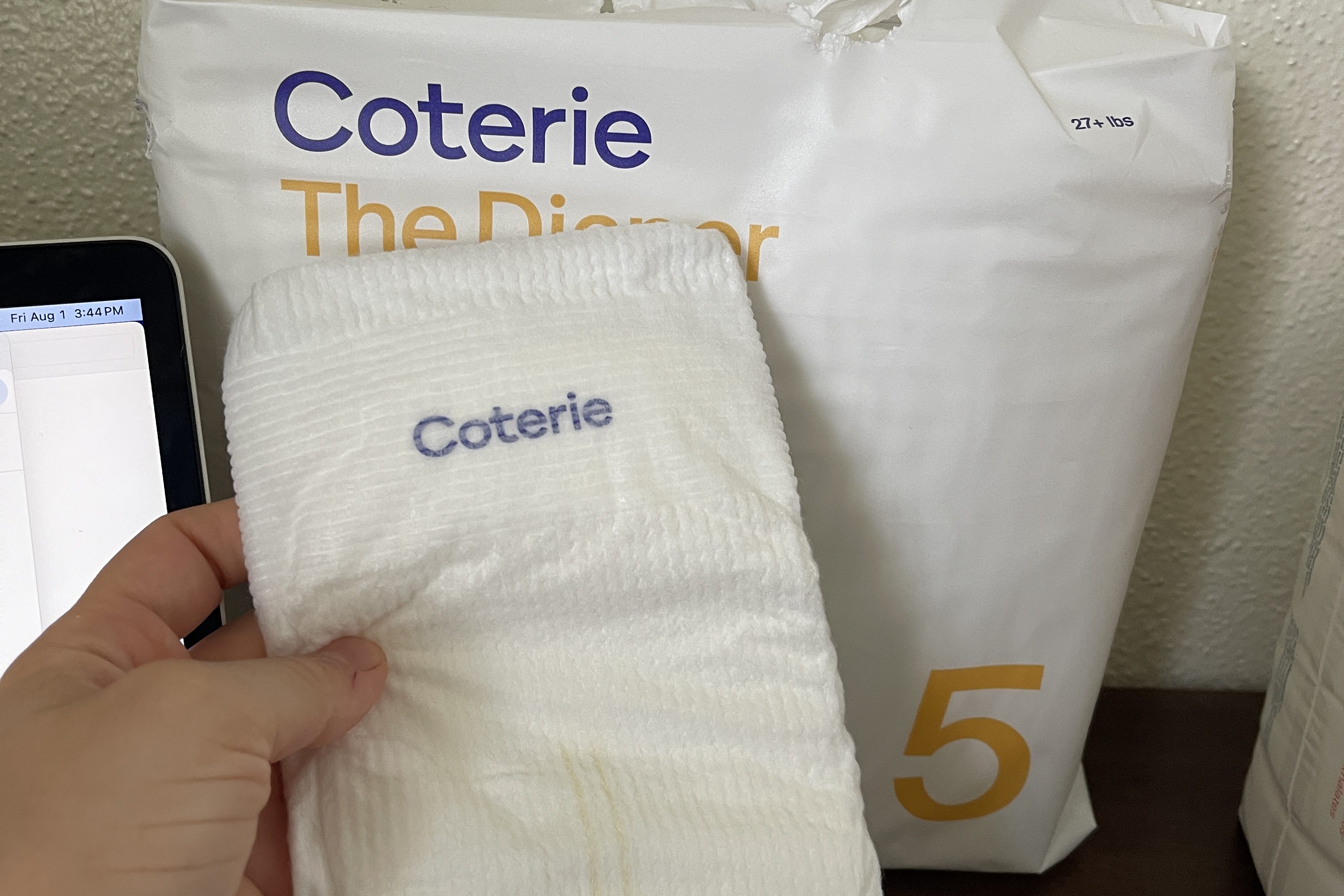
The only brand in the U.S. I can recommend with a totally clear conscience.
- 5/5 for absorbency and softness! Never leaks at night, never caused a rash.
- No perfume, dyes, or lotion.
Lab Result:
Mamavation’s latest tests found no detectable PFAS (inside or out).
Totally TCF, ultra-transparent about ingredients, EWG-approved, OEKO-TEX certified. And if you email, they’ll actually send you their test results—this level of transparency honestly makes me feel so valued as a consumer. I wish every brand was like this!
References: Mamavation, 2024; The Gentle Nursery, 2024
My advice: Pricey, but absolutely worth it for the safety and peace of mind.
5. Joonya
Tried this early on:
- Very small fit, low capacity, gets soggy quickly.
- No major complaints about fragrance, plastic, or harsh chemicals.
Lab Result:
No Mamavation results, but it’s got strong certifications (Nordic Swan, TCF, “hypoallergenic”) in Australia.
My advice: Safer on the chemical side, but just not effective enough in terms of absorbency or fit.
6. Eco Boom
I ordered Eco Boom on Amazon:
- Didn’t work for me—low capacity, weird smell after use, sometimes caused rash.
- Claims to be bamboo-based, fragrance-free, and natural cream-infused.
Lab Result:
Mamavation found no PFAS in Eco Boom Bamboo Diapers (non-detect), and they’re TCF.
Reference: Mamavation, 2024
My advice: If absorbency and comfort are your top priorities, you might want to look elsewhere. Ingredient-wise, though, it’s a decent choice.
7. Eco-Originals
- Quite stiff, left marks on baby’s legs, and lots of blowouts.
- Average absorbency.
Lab Result:
No PFAS detected. Newer batches use ECF (Elemental Chlorine Free) bleaching, which is not as ideal as TCF and could leave tiny byproducts behind.
Reference: Mamavation, 2024
8. Healthy Baby
Tried this “cleanest” brand twice (everyone raves about it):
- Very thin, gets wet super fast, in my opinion not worth the price.
- EWG Verified, very high ingredient transparency.
Lab Result:
No PFAS found (inside or out), TCF and OEKO-TEX certified.
Reference: Mamavation, 2024
My advice: One of the safest in terms of chemical content and transparency, but not a good value if you change diapers often.
9. EcoPeaCo
- Bamboo-based, from Australia.
- Not great for softness or absorbency.
- Claims clean, natural ingredients.
Lab Result:
Mamavation found 28 ppm (inside) and 12 ppm (outside) PFAS—higher than I’d like.
10. Kudos
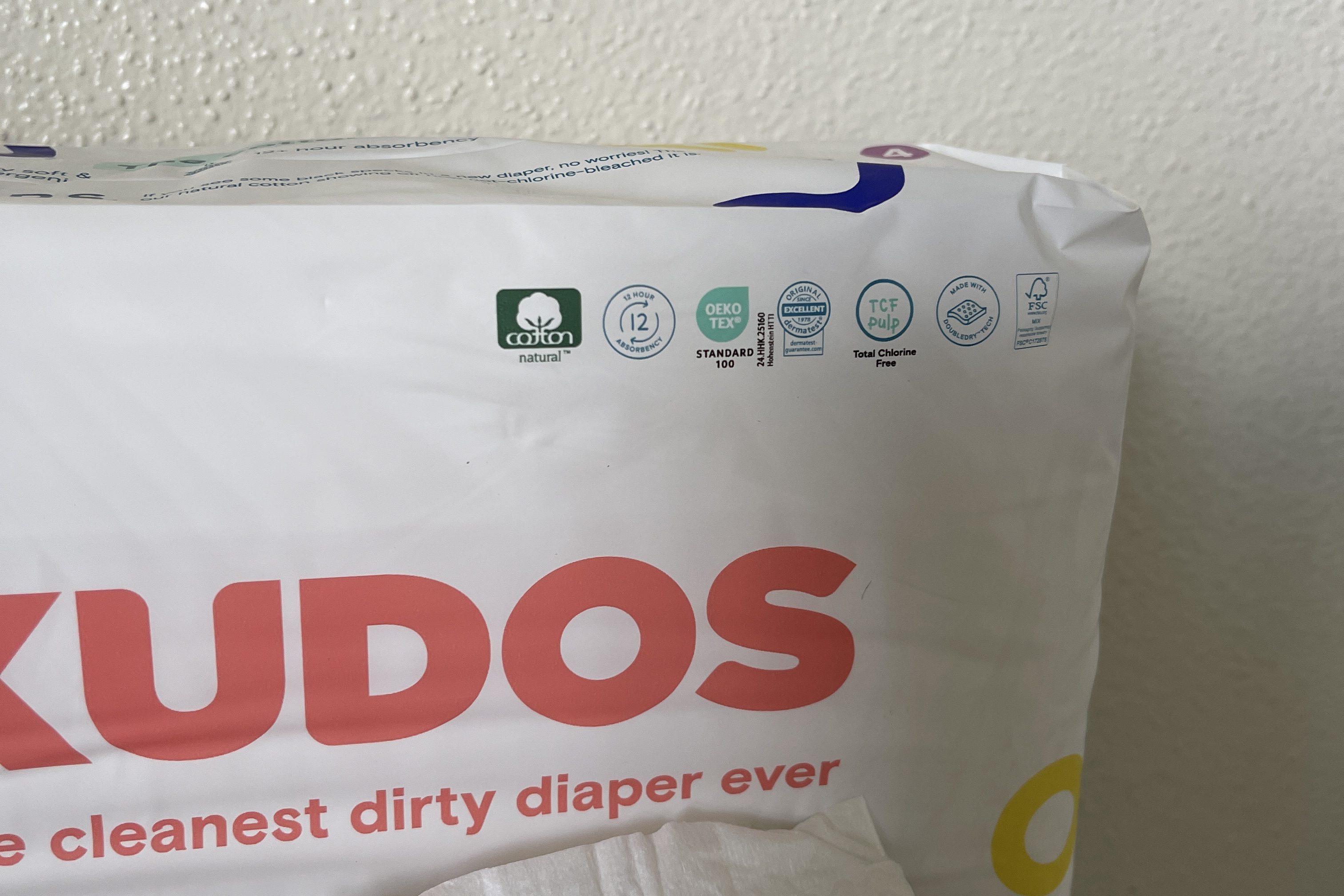
Tried this in the U.S. when my baby was born; new versions have a different formula.
- Average absorbency, sometimes feels oddly plasticky.
Lab Result:
Some batches had 16–53 ppm PFAS, with variation depending on production.
OEKO-TEX certified, says TCF, but PFAS levels change with batches.
11. Huggies & Prima
These are the classic supermarket brands I tried in Turkey and the U.S.
- Suspect because of chlorine, phthalates, and heavy perfumes.
- My baby had serious rashes and constant leaks.
Lab Result:
U.S. versions generally test PFAS-free, but the use of ECF and lack of ingredient transparency are still big concerns.
Comparison Table: Science & Real-World Experience
| Brand | PFAS (ppm) | TCF/ECF | Phthalates/Perfume | Absorbency | Transparency | Chemical Risk | Personal Note |
|---|---|---|---|---|---|---|---|
| Coterie | 0 | TCF | None | 5/5 | 5/5 | Very low | Best overall |
| Bamboo Nature | 18–22 | TCF | None | 5/5 | 4/5 | Low | Best in Turkey |
| Eco Boom | 0 | TCF | None | 2/5 | 3/5 | Very low | Clean but weak |
| Healthy Baby | 0 | TCF | None | 2/5 | 5/5 | Very low | Clean but pricey |
| EcoPeaCo | 28/12 | ? | ? | 2/5 | 3/5 | Medium | Stiff & expensive |
| Kudos | 16–53* | TCF | None | 3/5 | 4/5 | Med-high | Batch varies |
| EcoOriginals | 0 | ECF | None | 3/5 | 4/5 | Low | Just average |
| Sleepy | Unknown | Unknown | Unknown | 1/5 | 1/5 | Unknown | Not recommended |
| Joonya | N/A | TCF | None | 2/5 | 3/5 | Low | Small size/weak |
| Prima/Huggies | N/D or ? | ECF | Present | 1/5 | 2/5 | High | Lots of chemicals |
References:
- The Gentle Nursery, 2024
- Mamavation PFAS Diaper Study, 2024
- Environmental Working Group (EWG) Reports
- CDC ATSDR – Phthalates
- Peckham S et al., 2015, Community Dent Health
- Agency for Toxic Substances, 2012
- Meeker JD et al., 2009, Philos Trans R Soc Lond B Biol Sci
 SAFAK LAB